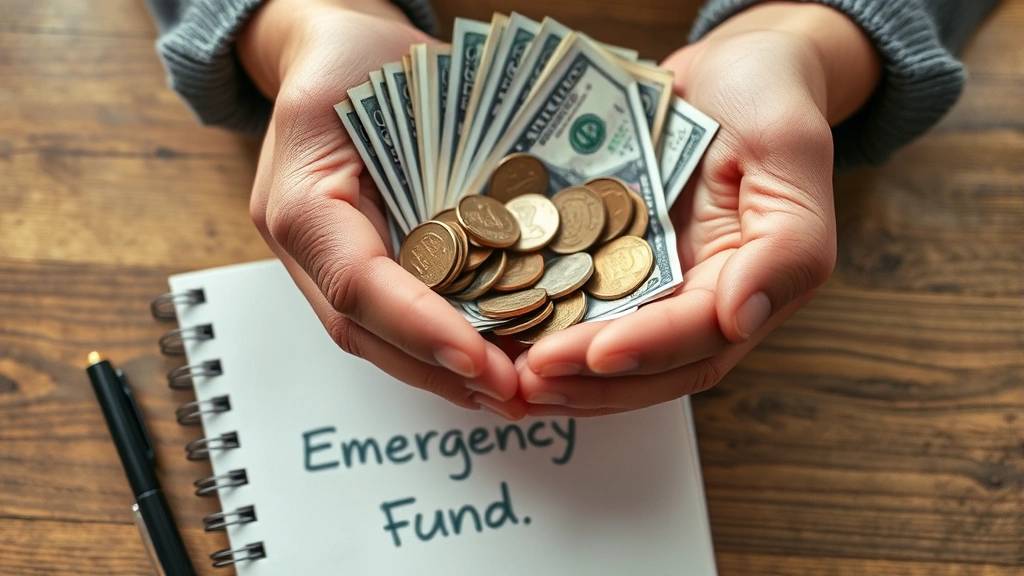
How to Build an Emergency Fund When You’re Living Paycheck to Paycheck
Let’s be real—when you’re living paycheck to paycheck, the idea of saving money for emergencies can feel like someone’s asking you to pull a rabbit out of a hat. You’re barely making rent, groceries are expensive, and unexpected expenses have a way of showing up right when you think you’ve caught a break. But here’s the thing: an emergency fund isn’t some luxury for rich people. It’s actually the single most important financial safety net you can build, especially when money’s tight.
The good news? You don’t need thousands of dollars to get started. You don’t even need hundreds. What you need is a realistic plan, a tiny bit of breathing room in your budget, and the understanding that even $25 or $50 can be the beginning of something that’ll genuinely change your financial life. This guide walks you through exactly how to build that fund without sacrificing your sanity or your immediate needs.

Why an Emergency Fund Actually Matters
When you’re living paycheck to paycheck, every unexpected expense feels catastrophic. Your car breaks down, and suddenly you’re looking at a $500 repair. Your kid needs new shoes. Your phone dies. These things aren’t emergencies in the traditional sense, but they feel like emergencies because they weren’t in your budget, and you don’t have extra money sitting around.
Without an emergency fund, you’ve got three options, and none of them are great: you go into debt (credit cards, payday loans, asking family for money), you skip something important (like a medical appointment or a car repair), or you stress yourself into a state of complete anxiety. An emergency fund breaks that cycle. It’s literally the difference between a minor inconvenience and a financial crisis.
There’s also the psychological piece. When you know you have even $500 set aside, the world feels a little less scary. You sleep better. You make better financial decisions because you’re not in pure survival mode. And honestly? That peace of mind is worth more than money itself.
If you want to understand how emergency funds fit into a broader financial strategy, NerdWallet has a solid breakdown of emergency fund basics.

How Much Do You Actually Need?
Financial advisors love to say you need three to six months of expenses saved. That’s great advice if you’ve got a stable job and your life is relatively predictable. But if you’re living paycheck to paycheck? That number can feel laughable. So let’s talk about what’s actually realistic.
Start with $1,000. That’s the magic number that covers most of life’s surprises—a car repair, a medical copay, a broken appliance, a one-time vet bill. One thousand dollars sits in that sweet spot where it’s achievable even on a tight budget, but it genuinely protects you from most emergencies.
Once you’ve hit $1,000, keep going. Aim for $2,500 next. Then $5,000. Eventually, you’ll want to work toward that three-month emergency fund, but you don’t have to get there overnight. The journey itself is the win.
To calculate your target, add up your essential monthly expenses: rent or mortgage, utilities, groceries, insurance, minimum debt payments, transportation. That’s your baseline. Three months of that number is your ultimate goal, but remember—you’re not trying to get there in three months. You’re trying to get there eventually, and that’s perfectly fine.
Finding Money to Save When There’s Nothing Left
This is the real question, right? Where do you find money when your budget is already squeezed to the limit? Here’s the honest answer: it’s not always about finding more money. Sometimes it’s about redirecting the money you already have.
The micro-savings approach. Start absurdly small. Can you save $10 a week? That’s $520 a year. Can you save $5? That’s $260. The point isn’t to hit some impressive number; it’s to start the habit and prove to yourself that it’s possible. Once you see that money accumulating, you’ll naturally look for ways to save more.
The “found money” method. Tax refunds, work bonuses, birthday money, selling stuff you don’t use—funnel all of it directly into your emergency fund. Don’t let it touch your checking account. If you get a tax refund, check the IRS website for details on what you’re owed, and commit to putting that entire refund into savings.
The expense audit. Go through your last three months of bank and credit card statements. Look for subscriptions you forgot about, apps you’re paying for, services you’re not using. Even small cuts add up. Canceling a $15 streaming service and a $10 app subscription is $25 a month—$300 a year. That’s real money.
The side hustle angle. You don’t need to build a second career. But if you can pick up a few hours of freelance work, sell stuff you don’t need, or do odd jobs for neighbors, that extra cash goes straight to emergency savings. It’s not your regular income; it doesn’t touch your budget. It’s a pure win for your fund.
Rounding up and automating. If you spend $47.50 on groceries, round up to $50 and move that $2.50 to savings. If your paycheck is $1,247, move $50 to savings before you even look at the rest. These tiny amounts feel invisible in your checking account but add up surprisingly fast.
For more strategic approaches to finding savings in your budget, the Consumer Financial Protection Bureau offers practical guidance on budgeting and saving.
The guilt-free reality check: You’re not trying to live like a monk. You’re trying to build a tiny financial cushion. If saving $10 a week means you can’t do anything fun ever, you’ll quit. So don’t. Save what you can, enjoy your life, and know that you’re moving in the right direction.
Automating Your Way to Success
Here’s a secret that’ll change your life: you can’t spend money you never see. Set up an automatic transfer from your checking account to a separate savings account on the day you get paid. Even $25 works. The key is that it happens automatically, without you having to think about it or choose to do it.
This works because it removes willpower from the equation. You’re not sitting there every paycheck deciding whether to save or spend. The decision was already made, and your brain adjusts to the “new” amount in your checking account surprisingly fast. After a couple of weeks, you won’t even notice the money’s gone.
If your employer offers direct deposit, ask if you can split your paycheck. Part goes to checking, part goes to savings. This is the easiest setup because the money never hits your main account.
If you can’t set up automatic transfers, set a phone reminder for payday. Move the money manually that same day. Make it as much of a habit as checking your email. The automation is about removing barriers, not about the method itself.
Keeping It Separate (and Untouchable)
Your emergency fund needs to live somewhere different from your regular checking account. This serves two purposes: it makes it harder to accidentally spend the money, and it keeps it out of sight so you’re not tempted to raid it for non-emergencies.
Open a separate savings account at a different bank if you can. Online banks like Ally, Marcus, or Discover often have no minimum balance requirements and higher interest rates than traditional banks. If opening a new account feels like too much right now, at least open a separate savings account at your current bank.
Give it a name. “Emergency Fund” or “Safety Net” or whatever speaks to you. Some people even set a specific goal amount and watch it grow toward that target. The psychological boost of seeing progress is real.
Make it slightly inconvenient to access. You want it available for actual emergencies, but not so convenient that you tap it for non-emergencies. If it takes a day or two to transfer the money to your checking account, that’s actually perfect. It gives you time to ask, “Is this a real emergency, or am I just stressed?”
Whatever you do, don’t get a debit card for this account. Don’t link it to your regular apps. The friction is a feature, not a bug.
Growing Your Fund Over Time
Building an emergency fund isn’t a sprint. It’s a years-long process if you’re starting from nothing, and that’s completely normal. But there are ways to accelerate it without destroying your quality of life.
Annual raises and bonuses. When you get a raise at work, commit to putting half of it toward your emergency fund. You’re already used to living on your current salary, so the extra money won’t feel like a loss. Same with bonuses, tax refunds, or any one-time money.
Seasonal savings. Tax season, holiday gift money, summer overtime—these periods often bring extra cash. Funnel it straight to savings. You’re not giving anything up because you weren’t counting on that money anyway.
Lifestyle changes that stick. If you quit a bad habit (smoking, eating out constantly, shopping for stress relief), put that savings into your emergency fund. You’re already not spending that money; now it’s working for you instead of against you.
Interest earnings. Once your emergency fund gets to a few hundred dollars, it’ll start earning interest. It’s not much, but it’s free money. That’s part of why keeping it in a separate savings account matters—you want it earning something, even if it’s just a percent or two.
To understand how emergency savings fit into a complete financial picture, Investopedia’s guide to emergency funds breaks down the strategy comprehensively.
The “no-guilt” principle: If you hit a rough patch and have to dip into your emergency fund for an actual emergency, that’s exactly what it’s there for. Don’t beat yourself up. Rebuild it. This isn’t about perfection; it’s about progress.
As you build your emergency fund, you might also want to explore strategies for managing debt alongside savings. Bankrate offers practical advice on starting a savings habit.
FAQ
What counts as an emergency?
An emergency is something unexpected that you need to pay for to maintain your health, safety, or housing. Medical bills, car repairs, home repairs, job loss—those are emergencies. A sale on shoes you want, a concert, or “treating yourself” because you’re stressed—those aren’t emergencies, even though they might feel urgent.
Should I use my emergency fund to pay off debt?
No. Build your emergency fund separately from your debt payoff strategy. You need both. The emergency fund protects you from going deeper into debt when life happens. Debt payoff is a different goal with a different timeline. That said, once you’ve got $1,000 saved, you can split your extra money between emergency fund growth and debt payoff if you want to tackle both simultaneously.
Is it okay to keep my emergency fund in a checking account?
It’s not ideal because it’s too easy to spend, but it’s better than not having an emergency fund at all. Try to move it to a savings account as soon as you can, even if it’s at the same bank. The slight separation makes a psychological difference.
What if I can’t save $10 a week?
Save what you can. If you can save $5 every other week, that’s $130 a year. That’s real progress. The goal is consistency over perfection. Even tiny amounts matter when you’re building from zero.
Should I invest my emergency fund in stocks?
No. Emergency funds need to be safe, accessible, and stable. Keep it in a high-yield savings account. You want to know that the money will be there and ready when you need it, not potentially down 20% because the market had a bad week.
What if I start saving and then something wipes out my emergency fund?
That’s life, and it happens to everyone. You rebuild it. You’ve already proved you can do it once; you can do it again. And this time, you’ll do it faster because you know how.