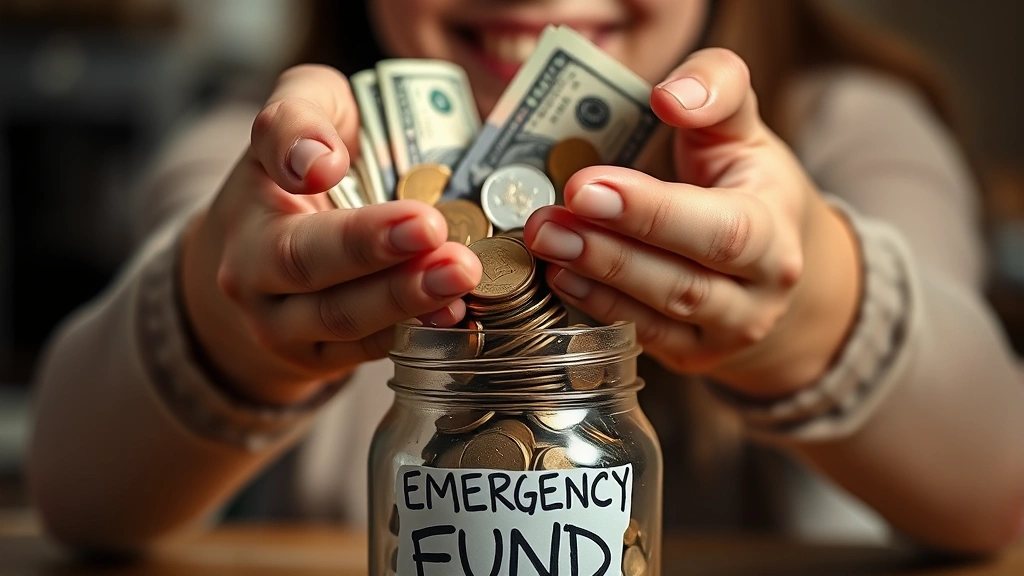
How to Build an Emergency Fund When You’re Living Paycheck to Paycheck
Let’s be real—when you’re living paycheck to paycheck, the idea of stashing away three to six months of expenses feels about as realistic as winning the lottery. Your money comes in, bills go out, and by the time you’ve paid for groceries, gas, and that one unexpected car repair, there’s nothing left. The thought of an emergency fund? It sounds nice in theory, like something only people with “extra” money can do.
But here’s the thing: building an emergency fund when you’re tight on cash isn’t impossible. It’s just different. It requires a shift in how you think about money—not as something that disappears, but as something you can actually control, even in small amounts. And honestly? Starting small is way better than not starting at all.
Why You Actually Need One (Even Now)
I get it—you’re thinking, “I don’t have money to save, so why are we talking about this?” But that’s exactly why you need an emergency fund. When you’re living paycheck to paycheck, one unexpected expense can spiral into a financial crisis. A car breaks down, a medical bill shows up, or your hours get cut at work—and suddenly you’re considering a payday loan or maxing out a credit card. That’s the debt cycle that keeps people stuck.
An emergency fund is your financial airbag. It’s not about being rich; it’s about protecting yourself from becoming poorer. Even $500 can prevent you from going into debt when something unexpected happens. Studies from the Consumer Financial Protection Bureau show that people without emergency savings are significantly more likely to resort to high-interest debt when crisis hits.
Think of it this way: if you can avoid even one emergency loan or credit card charge, you’ve saved yourself hundreds in interest. That’s the real payoff here.
The Reality Check: What’s Actually Possible
Before we dive into strategies, let’s talk numbers. Financial advisors usually recommend three to six months of expenses in an emergency fund. If your monthly expenses are $2,000, that’s $6,000 to $12,000. That number might make you want to close this tab and give up.
Don’t.
The goal isn’t to get there overnight. When you’re living paycheck to paycheck, your first target should be $500 to $1,000. That covers most common emergencies—car repairs, medical copays, broken appliances. Once you hit that, you can work toward a month’s worth of expenses. Then two months. You’re building this in layers, not all at once.
This approach to budgeting when you’re paid in installments is actually smarter than trying to jump straight to six months. You’ll see progress faster, stay motivated longer, and have real protection sooner. Plus, every dollar you save is a dollar you’re not paying interest on.
Micro-Saving Strategies That Actually Work
Here’s where the rubber meets the road. When your budget is tight, you can’t just “cut back on lattes.” (Please don’t let anyone tell you that’s your problem.) You need real strategies for real money situations.
The “Rounding Up” Method
Every time you spend money, round up your expense in your head and transfer the difference to your emergency fund. Spend $3.47 on coffee? Move $0.53 to savings. Buy groceries for $47.82? Transfer $0.18. It sounds tiny, but over a month, this adds up to $10-15 without you even noticing. Apps like Acorns or Digit automate this, but you can also do it manually if you prefer.
The “Found Money” Strategy
Tax refunds, rebates, cashback rewards, birthday money from relatives—this isn’t money you were counting on, so it doesn’t feel like you’re sacrificing. Commit to putting 50% of any “found money” into your emergency fund. That $200 tax refund? $100 goes straight to savings. The $25 rebate you forgot about? Half of that too. You still get to enjoy some of the windfall, but you’re also building your safety net.
The “Micro-Gig” Approach
You don’t need a full side hustle. Small tasks can generate quick cash: selling items you don’t use, doing odd jobs for neighbors, participating in online surveys, or freelancing a skill you already have. Even $20 a week adds up to over $1,000 a year. This is different from your regular job—it’s bonus money specifically earmarked for emergency savings.
Automating Your Way to Success
Here’s a secret: the best savings plan is one you don’t have to think about. Automation removes willpower from the equation.
Set up an automatic transfer of even $10-25 per paycheck to a separate savings account (more on that in a moment). You won’t miss it because it happens before you see the money. Over a year, $25 per paycheck becomes $650. If you can do $50? That’s $1,300. That’s a legitimate emergency fund without feeling the squeeze.
The key is timing: set the transfer for one day after you get paid, so it happens automatically before you mentally “spend” that money. Many banks offer this feature free, and it takes about five minutes to set up.
When you’re working on setting financial goals, automation is your best friend because it removes the daily decision-making. You’re not choosing every single day whether to save—the choice has already been made.

” alt=”Person setting up automatic transfers on laptop for emergency fund savings”/>
Protecting Your Emergency Fund Once You Have It
This is critical and often overlooked: once you’ve scraped together $500 or $1,000, you need to protect it. It’s not a “bonus” fund. It’s not for “just this once” when you want something. It’s for emergencies.
Here’s how to keep your hands off it:
- Use a separate bank: Open your emergency fund at a different bank than your checking account. This creates friction—you can’t just tap it on impulse. It takes a day or two to transfer money, which gives you time to ask, “Is this really an emergency?”
- Make it less accessible: Consider a high-yield savings account (currently earning 4-5% APY with banks like Bankrate’s top-rated options). You’ll earn interest on your money while it sits there, and the slightly lower accessibility makes you less likely to raid it.
- Label it clearly: Name the account something like “Emergency Fund – DO NOT TOUCH.” Sounds silly, but psychological barriers work. When you see that name every time you log in, it reinforces the purpose.
- Track it separately: Keep it out of your regular budgeting spreadsheet. Use a separate note or app so you’re not tempted to “borrow” from it mentally.
The emergency fund is sacred. The moment you start treating it like a regular savings account, you’ll find reasons to use it, and you’ll be right back where you started.
Boosting Your Fund With Side Income
If you’re serious about building this fund faster, side income is the accelerator. And when you’re living paycheck to paycheck, the beauty of side income is that it feels separate from your “real” budget.
Freelance writing, virtual assistant work, dog walking, delivery driving, selling photos online—the options are endless. Even 5-10 hours a week at $15-20/hour generates $300-400 monthly. That’s nearly half your initial $1,000 goal in just a few months.
Here’s the important part: commit to putting all side income into your emergency fund until you hit your first target. After that, you can split it between your fund and other goals. But initially, side income is emergency fund fuel, not extra spending money. This is where tackling debt strategically and building savings actually work together—you’re not choosing between them; you’re using separate income streams for each.

” alt=”Person working on laptop at home desk earning side income for emergency savings”/>
FAQ
What counts as an emergency?
An emergency is unexpected and necessary: car repairs, medical bills, urgent home repairs, job loss, unexpected travel. What doesn’t count: wants that feel urgent (new phone, clothing, vacation). If you had time to plan and save for it, it’s not an emergency.
Should I use a credit card or emergency fund?
Emergency fund first. Credit cards come with interest rates that make your problem worse. Your emergency fund is interest-free protection. Once you’ve covered the emergency with your fund, then you can focus on rebuilding it.
What if I can’t save anything right now?
Start with $1 per week into a separate account. Seriously. The habit matters more than the amount. Once you prove to yourself you can do it, increasing that amount becomes easier. Investopedia offers free resources on building saving habits from scratch.
Can I invest my emergency fund?
No. Emergency funds need to be liquid (easy to access) and stable. A high-yield savings account is the sweet spot—it earns interest without risk. Stocks, crypto, or other investments are too volatile. Your emergency fund’s job is safety, not growth.
What if an emergency happens before I’ve saved enough?
That’s okay. Use what you have. If you have $200 saved and face a $500 emergency, you’ve still cut your debt need in half. Then rebuild your fund while you’re paying off what you borrowed. You’re not starting from zero again; you’re starting from $200 ahead.