
How to Build an Emergency Fund When You’re Living Paycheck to Paycheck
Let’s be real—when you’re living paycheck to paycheck, the idea of building an emergency fund can feel like someone’s asking you to build a spaceship out of spare change. You’re already juggling bills, maybe some debt, and suddenly someone’s telling you to set aside money you don’t have. But here’s the thing: an emergency fund isn’t just nice-to-have. It’s actually the financial safety net that keeps one unexpected car repair or medical bill from derailing your entire life.
The good news? You don’t need a huge chunk of money to start. You don’t even need to be debt-free first. You just need a realistic plan that fits your actual life, not some Instagram-perfect budget that assumes you’ve got $500 to spare each month. Let’s talk about how to actually make this work.
Why an Emergency Fund Matters More Than You Think
Before we dive into the how, let’s talk about the why—because motivation matters when you’re trying to save money you barely have. An emergency fund is basically your financial shock absorber. It’s the difference between handling an unexpected $1,200 car repair and going into credit card debt because you had no other option.
When you’re living paycheck to paycheck, you’re one emergency away from financial chaos. And I’m not being dramatic. Studies show that roughly 40% of Americans couldn’t cover a $400 emergency without borrowing money or selling something. If that’s you, you’re not alone, and you’re definitely not failing at money—you’re just operating without a safety net.
Here’s what happens without an emergency fund: unexpected expense → credit card debt → high interest charges → more months of being stuck. With even a small emergency fund? Unexpected expense → you handle it → life goes on. That’s the power we’re after.
The really important part is understanding that building an emergency fund isn’t about being perfect with money. It’s about being intentional. You don’t need to overhaul your entire life or cut out every pleasure. You need a realistic system that actually works for your situation.
Deciding Your Target Amount
This is where a lot of advice falls apart for people living paycheck to paycheck. Financial gurus will tell you to save 3-6 months of expenses. That’s great if you’ve got a stable job and can actually do that, but if you’re struggling, that number might feel impossible.
Here’s a better approach: start smaller. Your first goal should be $1,000. Why? Because that covers most common emergencies—car repairs, urgent medical visits, appliance replacements. It’s a number that actually feels achievable, and it gets you out of the “one emergency away from disaster” zone.
Once you’ve hit $1,000 (and this might take a few months, which is totally fine), you can reassess. Some people aim for 3 months of essential expenses next—that’s just your absolute necessities like rent, utilities, food, and insurance. Not Netflix, not eating out, just survival mode expenses. For someone making $30,000 a year, that might be $5,000-$6,000. For someone making $50,000, maybe $10,000-$12,000.
The key is making your goal feel real and achievable, not like you’re chasing an impossible dream. You can always increase it later once the habit is locked in.
Finding Money in Your Budget (Seriously)
Now we get to the uncomfortable part: where’s this money actually coming from? If you’re living paycheck to paycheck, it feels like there’s nowhere to find it. But usually there’s something, even if it’s small.
Start by doing an honest audit of your spending. Look at the last 30 days of bank and credit card transactions. You’re not doing this to shame yourself—you’re doing it to find where your money actually goes. Most people are shocked. Common places money disappears:
- Subscriptions you forgot about. That $12.99 streaming service, the $9.99 meditation app, the $15 meal planning service. They’re small individually but add up to $50+ monthly.
- Convenience purchases. Grabbing coffee, ordering lunch, quick convenience store runs. This one’s easy to judge yourself for, so don’t. Just notice it.
- Duplicate services. Two streaming services doing the same thing, multiple cloud storage subscriptions, redundant insurance.
- Automatic renewals. Gym memberships you don’t use, software trials that became paid, apps charging you monthly.
Here’s my suggestion: don’t try to cut everything at once. Pick one or two things to eliminate or reduce. Maybe cancel the subscription you never use and commit to making coffee at home three days a week instead of five. That might free up $60-80 monthly. That’s $720-960 a year toward your emergency fund.
If you genuinely can’t find anything to cut, look at increasing income instead. This might be a side gig—freelance work, gig economy stuff, selling things you don’t need—even $50-100 extra monthly accelerates your fund significantly.
For a deeper dive into budgeting strategies, check out our guide on how to create a budget that actually works when you’re living on a tight income.
Where to Actually Keep Your Emergency Fund
This matters more than you’d think. Your emergency fund needs to be:
- Easily accessible (you need it fast when emergencies happen)
- Separate from your regular checking (so you don’t accidentally spend it)
- Earning some interest (why let inflation eat your savings?)
- Not invested in the stock market (you can’t risk this money)
The best option for most people is a high-yield savings account at an online bank. These currently offer 4.0-5.0% APY (annual percentage yield), which is way better than the 0.01% your regular bank is probably giving you. NerdWallet has a great comparison of high-yield savings accounts.
Why online banks? They have lower overhead, so they pass better rates to you. Popular options include Marcus, Ally, and American Express (yes, the credit card company). Your money’s FDIC insured up to $250,000, so it’s safe.
Open the account, set up a separate login you don’t use often, and automate small transfers to it. Even $20 per paycheck adds up—that’s $520 a year if you get paid every two weeks.
Some people worry that having easy access means they’ll raid it for non-emergencies. If that’s you, consider a regular savings account at a different bank entirely, even if the interest rate is lower. The friction of transferring money between banks might be exactly the barrier you need.
Building It Faster Without Burning Out
This is where the psychology of saving gets real. You can have the perfect plan, but if it makes your life feel miserable, you’ll quit. So let’s talk about actually sticking with this.
Automate it. Set up an automatic transfer from your checking to your emergency fund account the day after you get paid. Even $25 per paycheck. You’ll adjust to living on slightly less, and you won’t have to think about it. This is legitimately the most powerful tool for building savings when you’re broke.
If you get a tax refund, bonus, or unexpected money—that’s emergency fund money, not “I can finally buy that thing” money. I know that’s not fun to hear, but it’s the fastest way to get to your goal.
Celebrate milestones. When you hit $250, acknowledge it. When you hit $500, you’re doing something real. These aren’t huge amounts, but they’re progress, and progress builds momentum. You’re literally changing your financial trajectory here.
For more strategies on automating your finances for better money management, we’ve got a deeper guide that shows you how to set this up so you forget about it and it just works.
Don’t let perfect be the enemy of good. Some months you might only add $15 to your emergency fund because life happened. That’s fine. You’re still building it. The goal isn’t to be perfect; it’s to be consistent.
Protecting Your Fund Once You’ve Built It
Here’s the part people don’t talk about enough: once you’ve built your emergency fund, you have to actually protect it. Because suddenly, everything feels like an emergency.
Define what counts as an emergency:
- Unexpected medical or dental expenses
- Car repairs (not a new car, repairs)
- Home repairs (roof leak, broken furnace)
- Job loss or significant income reduction
- Urgent pet medical care
What’s NOT an emergency:
- Sales on things you want
- Gifts you want to buy
- Vacation plans
- Wanting to upgrade something
- “I deserve this” purchases
The distinction matters because the whole point of an emergency fund is to prevent debt when actual emergencies happen. If you’re dipping into it for non-emergencies, you’re defeating the purpose.
Some people find it helpful to keep their emergency fund at a completely separate bank so there’s friction involved in accessing it. Others use a regular savings account at their current bank but just… don’t tell themselves the login. Whatever creates enough of a barrier that you won’t impulse-raid it works.
Once you’re past your initial goal, you can think about investing for your future and building longer-term wealth. But emergency fund first, always. It’s the foundation everything else sits on.
If you’re also dealing with debt, you might wonder about the order of operations. Check out our guide on whether you should pay off debt or build savings first—the answer might surprise you.

” alt=”Person looking at laptop with financial planning documents, relaxed and focused expression”>
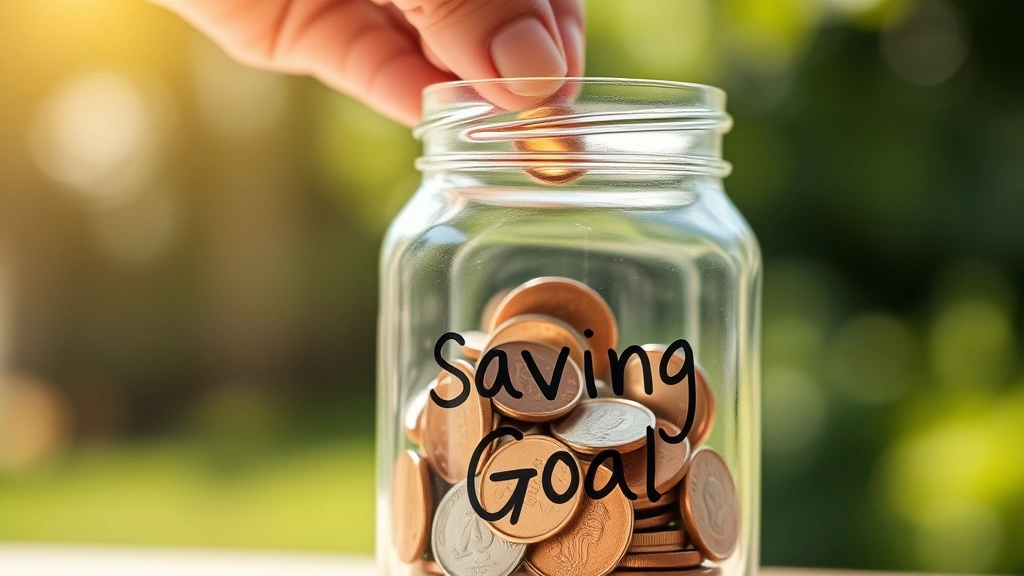
” alt=”Hand placing coins into a clear glass jar labeled with savings goals, sunny natural lighting”>
FAQ
How long does it actually take to build a $1,000 emergency fund?
This depends on your situation, but let’s do some math. If you can save $50 monthly, you’re looking at 20 months. If you can save $100 monthly, it’s 10 months. If you find $200 monthly through cutting subscriptions and a small side gig, you’re there in 5 months. The point is: it’s achievable, just not overnight. And that’s okay.
What if I’m also paying off debt? Should I build an emergency fund first?
This is the most common question, and the answer is nuanced. You want a small emergency fund ($1,000) before aggressively paying debt. Why? Because if you don’t have it and an emergency happens while you’re focused on debt payoff, you’ll go right back into debt. Once you’ve got $1,000, you can split your extra money between debt payoff and building your fund to 3 months of expenses.
Is a high-yield savings account really that much better?
Yes, genuinely. If you have $1,000 in a regular bank earning 0.01% APY, you make about 10 cents per year. In a high-yield account at 4.5% APY, you make $45 per year. That’s free money. Over time, when your fund is bigger, the difference is even more significant. Investopedia explains the mechanics here.
What should I do if I have to use my emergency fund?
First, don’t feel bad about it. That’s literally what it’s there for. Then, rebuild it. Don’t panic, don’t feel like you’ve failed. Just restart the automatic transfers and build it back up. You’ve done it once; you can do it again. And this time you know it’s possible.
Should I keep my emergency fund in cash at home instead?
This is tempting because it feels more “real,” but I wouldn’t recommend it. Cash at home is vulnerable to theft, fire, and your own impulses. Plus you’re earning zero interest. A separate bank account gives you security, FDIC protection, and at least some interest earnings. The slight inconvenience of having it in a different bank is actually a feature, not a bug.
What about using a credit card for emergencies instead?
This is the path that keeps people stuck. Credit cards are expensive (usually 18-24% interest), and they make emergencies worse by adding debt on top of the crisis. An emergency fund is specifically designed to prevent this cycle. If you’re relying on credit cards for emergencies, that’s a sign you need to prioritize building that fund.
Additional resources: The Consumer Financial Protection Bureau has practical guidance on building emergency funds, and the IRS provides information on emergency savings planning. Bankrate’s emergency fund calculator can help you figure out your specific target number based on your expenses.