
How to Build an Emergency Fund When You’re Living Paycheck to Paycheck
Let’s be real: the phrase “emergency fund” can feel like a punch in the gut when you’re already stretching every dollar just to cover rent, groceries, and that one subscription you keep forgetting to cancel. But here’s the thing—an emergency fund isn’t some luxury for rich people. It’s actually your financial safety net, and it’s way more achievable than you think, even when money feels impossibly tight.
I get it. You’ve probably heard the advice before: “Save three to six months of expenses!” and thought, “Yeah, sure, and I’ll also grow wings and fly to the moon.” The good news? You don’t have to start there. Building an emergency fund when you’re living paycheck to paycheck is less about finding money you don’t have and more about redirecting the money that’s already flowing through your life. It’s possible, it’s doable, and I’m going to walk you through exactly how to make it happen.
Why You Actually Need an Emergency Fund
Before we dive into the how, let’s talk about the why—because motivation matters when things get tough. An emergency fund is basically your financial airbag. It’s there for the stuff you genuinely can’t predict: your car breaks down, you need an unexpected dental procedure, your hours get cut at work, or you lose your job entirely.
Here’s what happens without one: when an emergency hits, most people turn to credit cards or loans. Suddenly, you’re not just dealing with the original problem—you’re dealing with interest charges, late fees, and the creeping anxiety that comes with debt. That $1,000 car repair becomes a $1,400 problem by the time you’ve paid interest. And if you’re already living paycheck to paycheck, that debt can spiral fast.
According to the Consumer Financial Protection Bureau, nearly 40% of Americans couldn’t cover a $400 emergency without borrowing money or selling something. That’s not a character flaw—it’s just the reality of how tight budgets work. But it’s also fixable. An emergency fund, even a small one, breaks that cycle.
How Much Should You Actually Start With?
Forget the “three to six months” advice for now. That’s the goal you’re building toward, not where you start. When you’re living paycheck to paycheck, your first target is much smaller: $500 to $1,000.
Why this number? Because most common emergencies fall in this range. Your car needs new brakes? Around $500–$800. Your laptop dies and you need it for work? Maybe $400–$800. A surprise vet bill? Often under $1,000. Getting to this initial cushion means you can handle the majority of life’s curveballs without going into debt.
Once you’ve hit that first milestone, you can aim for one month of expenses. If your monthly bills total $2,500, that’s your next target. From there, you gradually build toward three months, then six. But honestly? Even one month of expenses is a game-changer when you’re living tight. It takes the panic out of the equation.
The reason to break it into these smaller goals is psychological—and totally valid. Hitting $500 feels real and achievable. It builds momentum. You’ll actually believe you can do this, because you’ll have already done it.
Finding Money You Didn’t Know You Had
This is where most people get stuck. “I don’t have money to save!” And you might be right—if you’re truly spending every penny on essentials, there’s not much wiggle room. But here’s the thing: almost everyone has *some* wiggle room, even if it feels invisible.
Start with a spending audit. Pull up your bank and credit card statements from the last three months. I know, it’s not fun. But look for patterns. Where’s your money actually going? Most people find surprises here: subscriptions they forgot about, coffee runs that add up, delivery fees, impulse purchases. You’re not looking to punish yourself—you’re just looking for awareness.
Here are the most common places people find money:
- Subscriptions and memberships: That streaming service you’re not watching, the gym membership you haven’t used since January, the meal kit subscription, the premium app. Even three $15 subscriptions you forgot about equals $45/month or $540/year.
- Food spending: This is usually the biggest one. Eating out, delivery apps, convenience store runs—these add up fast. You don’t have to cut them entirely, but even reducing by 50% could free up $100–$300/month.
- Impulse purchases: We all have them. That thing you didn’t plan to buy but grabbed anyway. Tracking these for a month usually surprises people.
- Utilities and phone plans: Shop around. You might be overpaying. A quick call to your provider or switching to a cheaper plan could save $20–$100/month.
The goal isn’t to become a miser—it’s to be intentional. You’re redirecting money that’s already leaving your account, just in a more purposeful direction.
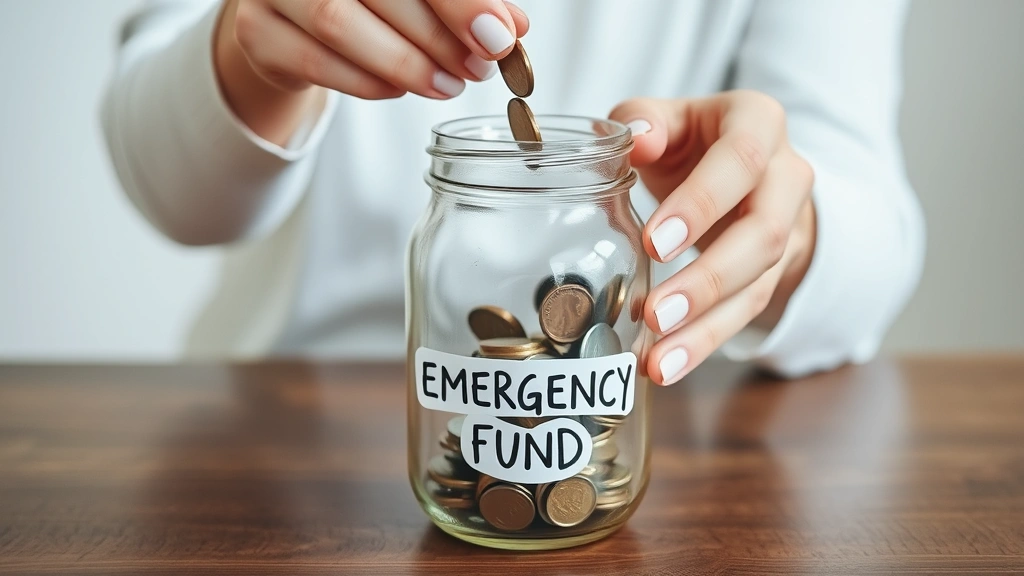
Automating Your Savings (The Secret Weapon)
Here’s the secret that actually works: automate everything. The moment your paycheck hits your account, have a portion automatically transferred to a separate savings account. You won’t see it, you won’t miss it, and it’ll be there when you need it.
Start small. Even $25 per paycheck adds up. If you get paid biweekly, that’s $650 a year. If you get paid weekly, it’s $1,300 a year. Not bad for money you probably won’t even notice is gone.
Here’s how to set it up:
- Open a separate savings account at a different bank (or at least a different branch). The separation matters psychologically—it’s not as tempting to dip into.
- Set up an automatic transfer on payday. Most banks let you do this for free.
- Make it small enough that you won’t feel the pinch. $25, $30, $50—whatever works for your budget.
- Increase it when you can. Got a raise? Bonus? Tax refund? Dump it in the emergency fund.
The beauty of automation is that it removes willpower from the equation. You’re not deciding every month whether to save—it’s just happening. And that’s when real progress happens.
If you’re struggling to find even $25, that’s okay. Start with $5 or $10. Seriously. The amount matters less than the habit. Once you build the muscle, increasing it gets easier.
Boosting Your Fund With Side Income
Sometimes, cutting expenses isn’t enough. If you’re truly stretched thin, adding income—even temporarily—can accelerate your emergency fund building. This doesn’t have to be complicated or time-consuming.
Quick side income ideas:
- Freelancing your existing skills (writing, design, virtual assistance, tutoring)
- Gig work (delivery, rideshare, task apps)
- Selling stuff you don’t use (clothes, books, electronics)
- Seasonal work (retail during holidays, tax prep in spring)
- Pet sitting or dog walking
- Online surveys or user testing (not glamorous, but easy)
The point isn’t to overhaul your life—it’s to find an extra $100–$300/month if you can. Even three months of side gigs can get you to that initial $500–$1,000 goal. Then you can scale back, knowing you’ve got that foundation.
This is also where exploring side hustles strategically makes sense. You’re not trying to become an entrepreneur—you’re just trying to give your emergency fund a boost.
Staying Motivated When Progress Feels Slow
Let’s be honest: watching your emergency fund grow when you’re living paycheck to paycheck can feel glacially slow. You might save $50 and immediately think, “That’s nothing. I’ll never get to $500.” And that’s when a lot of people give up.
Don’t. Here’s why: slow progress is still progress. If you save $50/month, you’ll hit $500 in ten months. That might feel like forever, but here’s the truth: ten months will pass anyway. You can either arrive at month ten with an emergency fund or without one. The choice is yours.
To stay motivated, track your progress visually. Some people use a simple spreadsheet, others prefer a visual tracker (like coloring in a chart as they reach milestones). Seeing that number grow, even slowly, actually matters for your brain. It reinforces that this is working.
Also, celebrate the small wins. You hit $100? That’s real. You resisted an impulse purchase and put that $20 in savings instead? That counts. These aren’t nothing—they’re proof that you can do this.
And remember: once you hit that first $500–$1,000, the psychology shifts. You’ve already proven you can save. You’ve already shown yourself it’s possible. The next phase feels less impossible because you’ve done the hardest part.

If you’re also working on budgeting for beginners, building an emergency fund becomes even more powerful. A solid budget tells you exactly where your money’s going, which makes it way easier to find those savings opportunities. And if you’re dealing with how to pay off debt, an emergency fund prevents you from going deeper into debt while you’re climbing out of the hole you’re already in.
For those already in a better financial position, investing for beginners comes next—but only after you’ve got that emergency cushion. And if you’re thinking about bigger financial goals, understanding financial independence starts with this exact foundation: a solid emergency fund that lets you breathe.
FAQ
How do I keep myself from using the emergency fund for non-emergencies?
This is the million-dollar question. First, be honest about what counts as an emergency. “I want new shoes” is not an emergency. “My car won’t start and I need it for work” is. If you’re unsure, wait 24 hours before touching the fund. Real emergencies will still be emergencies tomorrow.
Second, keep the money separate—literally in a different bank if possible. The harder it is to access, the less likely you’ll tap it for something stupid. And third, tell someone about your fund. Accountability helps. When you’re thinking about raiding it, knowing you’d have to explain it to someone makes you pause.
What if I have debt? Should I pay that off first or build an emergency fund?
Do both, but prioritize the emergency fund first—at least to that initial $500–$1,000. Here’s why: if you don’t have an emergency fund and something goes wrong, you’ll go right back into debt. You’ll be running in circles. Get that basic cushion in place first, then attack the debt. Investopedia has great guidance on balancing these priorities.
Can I use a high-yield savings account for my emergency fund?
Absolutely, and you should. A high-yield savings account gives you interest (currently around 4–5% APY, which is pretty solid), and your money’s still accessible if you need it. It’s not an investment account—it’s just a savings account that pays better. This is actually perfect for an emergency fund because it’s safe and liquid.
What counts as a real emergency?
Emergencies are unexpected expenses you genuinely can’t avoid: medical bills, car repairs, job loss, major home repairs, necessary dental work. Non-emergencies: that sale at Target, wanting to go out with friends, birthday gifts, vacation. The rule of thumb: would you borrow money for this if you had to? If yes, it’s an emergency. If no, it’s not.
I’m behind on bills. Can I really afford to save for an emergency fund?
This is tough, but yes—even a tiny amount helps. If you’re behind on bills, tackling that is important too. But here’s the reality: without an emergency fund, one unexpected expense will make things worse. Even $10/month toward an emergency fund is better than nothing. And as your bill situation improves, you can increase your savings. They’re not mutually exclusive, just prioritized differently depending on your situation.
How long should it take to build an emergency fund?
There’s no set timeline. It depends on your income, expenses, and how much you can save each month. Some people hit $1,000 in six months. Others take a year or more. The point isn’t speed—it’s consistency. You’re building a habit and a safety net, not winning a race.