
How to Stop Living Paycheck to Paycheck: A Real Guide to Breaking Free
You know that feeling when your paycheck hits your account and you’re already mentally dividing it up before you’ve even opened your banking app? Rent, utilities, groceries, minimum payments—and then it’s gone. Again. You’re not alone in this cycle, and here’s the thing: it’s not because you’re bad with money. It’s because nobody teaches us how to actually *structure* our finances so we’re not constantly running on empty.
Breaking the paycheck-to-paycheck cycle isn’t about earning more (though that helps). It’s about understanding where your money’s going, creating intentional buffers, and building a system that works *with* your brain instead of against it. This guide walks you through exactly how to do that—no judgment, no shame, just practical steps that actually work.
Understand Your Current Money Flow
Before you can fix the paycheck-to-paycheck trap, you need to see exactly what’s happening with your money. Most people don’t actually know. They have a vague sense that everything costs too much, but they haven’t sat down and looked at the real numbers.
Pull up your last three months of bank and credit card statements. Don’t look away. I know it’s tempting, but this is the foundation of everything. You’re looking for patterns: What are your non-negotiable expenses (rent, insurance, minimum debt payments)? What’s discretionary (eating out, subscriptions, shopping)? What’s the gap between your income and your spending?
Here’s what most people discover: they’re spending more than they thought on things that don’t actually matter to them. A coffee here, a streaming service there, the “just this once” food delivery order that becomes three times a week. These aren’t character flaws—they’re just habits that’ve built up without intentional awareness.
The key insight? Your money’s already telling you a story about your priorities. You’re just not reading it yet. Once you see it clearly, you can actually *choose* differently.
Track Every Dollar (Yes, Really)
I know you’ve probably heard this before, and you might’ve rolled your eyes. But hear me out: tracking isn’t about restriction or punishment. It’s about information. When you know where your money’s going, you get agency back. You stop feeling like money’s happening *to* you and start feeling like you’re actually directing it.
You don’t need a complicated system. Pick one: a simple spreadsheet, an app like YNAB or Mint, or even a notes app where you jot things down. What matters is that you’re capturing transactions as they happen (or shortly after). This takes maybe two minutes a day.
The magic happens when you review your spending weekly. Not to shame yourself—to understand yourself. You’ll start noticing: “Oh, I spend $200 a month on coffee and snacks without thinking about it.” Or: “I’m paying for four subscriptions I’ve forgotten about.” These aren’t failures. They’re opportunities.
When you’re living paycheck to paycheck, creating a realistic budget becomes infinitely easier once you actually know your baseline spending. You’re not guessing anymore—you’re working with real data.
Create a Realistic Budget That Sticks
Here’s why most budgets fail: they’re built on deprivation. You tell yourself you’re going to cut everything, spend nothing on fun, and suddenly have money left over. That works for maybe two weeks, then you’re back to old habits because you’re miserable.
A realistic budget isn’t about being perfect. It’s about being honest about what you actually need, what you actually want, and building in room for both.
Start with the non-negotiables: housing, utilities, insurance, minimum debt payments, groceries. These are fixed-ish (you might be able to reduce some eventually, but not overnight). Write down the real numbers.
Then add a buffer for the stuff that’s necessary but variable: gas, car maintenance, personal hygiene, household supplies. Look at your last few months and take an average.
Now here’s the part that matters: build in an intentional “fun” category. Not “I’ll never spend on this,” but “I can spend X per month guilt-free.” This might be dining out, hobbies, whatever brings you joy. When you budget for it instead of pretending it won’t happen, you actually stick to limits because you’re not fighting yourself.
The budget framework that works best for paycheck-to-paycheck situations is the 50/30/20 rule (adjusted for your situation): 50% to needs, 30% to wants, 20% to savings and debt repayment. If you’re making $2,000/month, that’s $1,000 to essentials, $600 to discretionary, and $400 to building financial stability. Obviously, adjust based on your actual numbers.
The real game-changer? When you get paid, immediately move the “savings” portion to a separate account. Out of sight, out of temptation. Then live on what’s left. This is called paying yourself first, and it’s the secret weapon of people who actually build wealth.
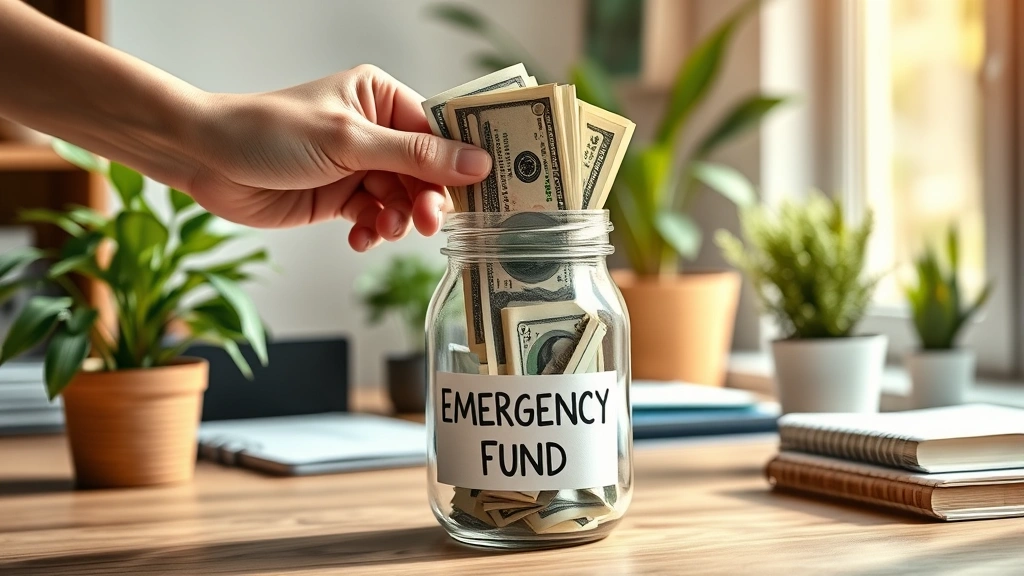
Build Your Emergency Fund
You can’t break the paycheck-to-paycheck cycle without a buffer. Here’s why: the moment something unexpected happens—car repair, medical bill, lost hours at work—you’re right back to crisis mode, pulling out a credit card, and digging the hole deeper.
An emergency fund is your insurance policy against this. It’s not optional. It’s foundational.
Start small. Your first goal is $1,000. That’s enough to cover most common emergencies without derailing you. Once you’ve got that, keep going until you hit one month of expenses, then three months.
Where do you put it? A high-yield savings account, separate from your checking. You want it accessible (not in an investment account), but removed enough that you won’t dip into it for non-emergencies. High-yield savings accounts currently offer 4-5% APY, so your money’s actually working for you while it sits there.
How do you fund it? Start with whatever you can—$25/week, $10/paycheck, whatever’s realistic. Even small amounts add up. The point is consistency, not perfection. Once you’ve got that $1,000 cushion, you’ll feel the psychological shift immediately. Suddenly, an unexpected $300 expense isn’t a crisis. It’s just… an expense. You’ve got this.
Optimize Your Income and Expenses
Once you’ve got the fundamentals in place—tracking spending, a real budget, and the beginning of an emergency fund—it’s time to look at the bigger levers.
On the expense side: Go through your subscriptions. Cancel anything you’re not actively using. Negotiate your bills: call your insurance company, internet provider, phone company, and literally ask if they can lower your rate. You’d be surprised how often they can. Meal plan and cook at home more (this alone saves most people $100-300/month). Look at your transportation costs—can you carpool, use public transit, or reduce trips?
These aren’t about deprivation. They’re about redirecting money toward things that matter more to you. If you hate cooking, don’t force it. But if you’re spending $400/month on food delivery, that’s an opportunity to find a middle ground.
On the income side: This is where the real breakthrough happens. If you’re living paycheck to paycheck on your current income, increasing that income is often the fastest way out. This might look like: asking for a raise at your current job, picking up freelance work in your field, starting a side hustle, or learning a new skill that commands higher pay.
Even an extra $200-300/month—a few hours of freelance work, a part-time gig, selling stuff you don’t need—dramatically accelerates your timeline out of the cycle. That extra money goes straight to your emergency fund or debt payoff, not lifestyle creep.

Set Up Automatic Transfers
Here’s the truth: willpower is limited. You can’t rely on yourself to “remember” to save money. You need to remove the decision-making.
The day you get paid, set up an automatic transfer to move your budgeted savings amount to your emergency fund account. Same with any debt payments—automate them. Same with bills if you can.
This does two things: First, it ensures you actually save (you can’t spend what you don’t see). Second, it removes the emotional decision-making. You’re not sitting there thinking, “Do I really want to save this, or should I spend it?” The decision’s already made. You’re just living on what’s left.
Most banks let you set up multiple transfers, so you can have: automatic transfer to emergency fund, automatic transfer to debt payoff, automatic bill payments. Then you literally just manage your discretionary spending with what remains in checking. It’s simple. It works.
This is actually how financial experts recommend managing money—by automating the important stuff so it happens regardless of how you feel on any given day.
The Long Game: Building Real Financial Stability
Breaking the paycheck-to-paycheck cycle isn’t a sprint. It’s a shift in how you relate to money. You’re moving from reactive (reacting to each paycheck) to proactive (actually planning your money).
The timeline varies: If you make aggressive changes and cut expenses, you might build a $1,000 emergency fund in a couple months. A full 3-month emergency fund might take 6-12 months. But here’s what matters: you’re moving. You’re not stuck anymore.
As you build stability, the next steps become clearer: paying off high-interest debt, saving for bigger goals, eventually investing. But you can’t think about any of that when you’re scrambling each month. First, you stabilize. Then you build.
The best part? Once you’ve got three months of expenses saved, you’ve essentially given yourself permission to breathe. A job loss isn’t a catastrophe. A car repair isn’t a crisis. You’ve built a buffer between you and chaos. That’s not a small thing.
FAQ
How long does it really take to stop living paycheck to paycheck?
It depends on your income, expenses, and how aggressively you implement these changes. Realistically, 6-12 months to build a solid emergency fund and start feeling genuinely stable. But you’ll feel the shift much sooner—within the first month of tracking spending and budgeting intentionally.
What if I have debt? Do I save first or pay debt first?
Start with a small emergency fund ($1,000), then tackle high-interest debt (credit cards, payday loans) aggressively while maintaining that buffer. Once high-interest debt is gone, build to a full 3-month emergency fund, then focus on lower-interest debt. Different debt payoff strategies work for different people, but the priority is: emergency fund, high-interest debt, then building wealth.
What if my expenses are genuinely higher than my income?
Then increasing income becomes non-negotiable. You physically cannot budget your way out of spending more than you earn. Look at side income, career advancement, or potentially relocating to lower your housing costs (often the biggest expense). This is the hardest situation, but it’s also where the most dramatic changes happen.
How do I avoid lifestyle creep when my income increases?
Automate increases before you feel them. The moment you get a raise or earn extra income, automatically move a chunk to savings/debt payoff, and only let yourself spend the remainder. This way, you don’t get used to having that money available to spend.
Is it okay to still spend money on things I enjoy while building financial stability?
Absolutely. If you don’t, you’ll burn out and quit. Budget for fun. Make intentional choices about what brings you joy, and spend on those things guilt-free within your budget. The goal isn’t deprivation—it’s intentionality.