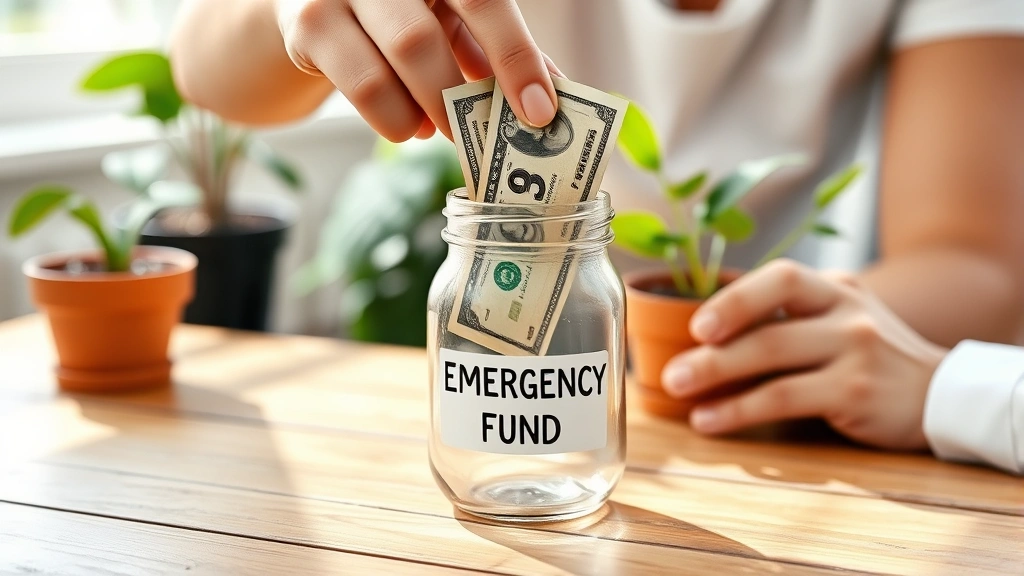
How to Build an Emergency Fund That Actually Works for Your Life
Let’s be real—most of us know we’re supposed to have an emergency fund. But knowing and actually doing are two totally different things, right? You’ve probably heard the advice: “Save three to six months of expenses.” And maybe you’ve nodded along while thinking, “Yeah, that’s… a lot of money I don’t have right now.” Here’s the thing though: an emergency fund isn’t some financial fantasy reserved for people who have it all figured out. It’s actually one of the most practical, life-changing moves you can make with your money. The best part? You don’t need to be rich to start one.
An emergency fund is basically your financial safety net. It’s money set aside specifically for when life throws you a curveball—a car repair, medical bill, job loss, or that unexpected dental work insurance won’t cover. Without one, you’re probably reaching for credit cards, taking on debt, or stressing yourself into oblivion. With one? You’ve got breathing room. You’ve got options. You’ve got peace of mind that’s honestly worth more than you’d think.

Why Your Emergency Fund Actually Matters
Think about the last time something unexpected happened—your car broke down, you got sick, your phone died and needed replacing. How did you handle it? If you’re like most people, you probably felt that immediate spike of stress wondering how you’d pay for it. That feeling sucks, and it’s totally avoidable with an emergency fund in place.
Without one, you’re forced into reactive decisions. You take on high-interest credit card debt. You ask family for money and feel awkward about it. You skip necessary medical appointments because you can’t afford the copay. You stay in a job you hate because you can’t afford to be without income for even a week. An emergency fund breaks that cycle. It gives you agency. It lets you make decisions from a place of stability rather than panic.
Here’s something else that matters: building an emergency fund actually teaches you about your own money. When you start tracking what you need to survive each month, you get real clarity on your spending. You start noticing patterns. You realize where your money actually goes. That self-awareness alone is worth the effort, even before you consider the safety net you’re creating.

How Much Should You Actually Save?
This is where most advice gets unhelpful. Financial experts will tell you to save three to six months of expenses, and that’s not wrong—but it’s also not where you start. If you’re living paycheck to paycheck, telling you to save six months of expenses is like telling someone who can’t swim to jump into the deep end. So let’s break this down into actual, doable stages.
Stage One: Your Starter Fund ($500-$1,000)
Your first goal is just getting something in the bank. This is your “oh crap” fund for small emergencies. Your car needs new tires. Your washing machine breaks. Your pet needs a vet visit. A thousand bucks covers a lot of these situations and gives you immediate breathing room. This should take most people a few months to build, depending on their income.
Stage Two: One Month of Expenses
Once you’ve hit that starter fund, your next target is one full month of essential expenses. Essential means rent, utilities, food, insurance, minimum debt payments—the stuff you absolutely need to survive. Not Netflix, not coffee shop visits, not new clothes. Just survival mode expenses. For most people, this is somewhere between $1,500 and $3,500, depending on where you live and your situation.
Stage Three: Three to Six Months
This is the “official” recommendation, and here’s why it matters: it covers most life emergencies. Job loss, major medical event, extended car problems—three to six months gives you runway to handle these without derailing your life. You’re not there yet? That’s fine. Getting to one month first is a huge accomplishment and gives you real security.
Here’s the honest truth: the “right” amount depends entirely on your situation. If you’re self-employed, you probably want closer to six months because your income is less predictable. If you have stable employment and a partner’s income to fall back on, three months might be plenty. If you have health issues or an older car, you might want more cushion. The point is to build something that actually matches your real life, not some arbitrary number.
One more thing: your emergency fund is separate from your other savings. This isn’t your vacation fund or your down payment fund. This is locked away for actual emergencies. That boundary matters because it keeps you from raiding it for non-emergencies.
Where to Keep Your Emergency Fund
This decision matters more than people realize. You want your emergency fund to be:
- Accessible: You need to get to it quickly without penalties
- Safe: FDIC insured so your money’s actually protected
- Separate: Not mixed in with your checking account so you’re not tempted to spend it
- Earning interest: Why leave money in a zero-interest account?
A high-yield savings account is honestly your best bet here. These accounts typically offer interest rates around 4-5% right now (rates change, so check current rates), which means your money actually grows while it sits there. You can access it within a few business days if you really need it, but it’s separate enough that you won’t accidentally spend it on Thursday night wings.
Some people use money market accounts, which work similarly. Some use short-term CDs if they want slightly higher returns and don’t mind a tiny bit of a wait to access the money. The key is finding something that works with your bank and your psychology. If you’re the type who raids savings accounts, maybe a separate bank entirely is smarter. If you need instant access to feel secure, stick with true savings accounts.
Whatever you choose, make sure it’s FDIC insured. That means if something goes wrong with the bank, your money up to $250,000 is protected. That’s your safety guarantee, and it matters.
Building Your Fund: A Realistic Strategy
Okay, so you know why you need an emergency fund and how much to aim for. Now comes the part that actually trips people up: actually building the dang thing when money’s tight. Here’s a strategy that works.
Step One: Find Your Number
Sit down and figure out your bare-bones monthly expenses. Rent, utilities, insurance, minimum debt payments, food. Not the fun stuff—the survival stuff. Write it down. That’s your baseline. For your starter fund, aim for one month of that number, or $1,000, whichever is less.
Step Two: Automate It
This is the game-changer. Set up an automatic transfer from your checking account to your savings account on the day you get paid. Start small—even $25 per paycheck adds up. The reason automation works is because you don’t have to remember to do it, and you don’t have to use willpower. The money just moves, and you adjust your spending to what’s left. It’s psychological magic.
Step Three: Find Extra Money
Automation gets you started, but you probably need to find additional money to build this faster. This is where you look at your budget honestly. Maybe you cut back on subscription services temporarily. Maybe you do a spending freeze on non-essentials for a few months. Maybe you pick up a side gig for a couple months and throw all that money at the emergency fund. The point isn’t to be miserable—it’s to be intentional for a short period.
Step Four: Don’t Touch It (Unless It’s Actually an Emergency)
Here’s where discipline comes in. Your emergency fund is for emergencies, not for wants. “I want new shoes” is not an emergency. “My car won’t start and I need it for work” is an emergency. “I’m bored” is not an emergency. “I have a medical bill my insurance won’t cover” is an emergency. You’ve probably got good judgment about this already—trust it.
If you do have to use your emergency fund, don’t beat yourself up about it. That’s literally what it’s for. Just rebuild it once you’re back on solid ground. It might take a few months, but you know you can do it now because you’ve done it before.
Common Mistakes People Make
You’re going to want to avoid these pitfalls because they’ll derail your progress:
Mistake One: Aiming Too High Too Fast
You don’t need six months of expenses right now. You need $1,000. Get that first. Then build to one month. Then go bigger. Breaking it into stages keeps you motivated because you actually hit milestones instead of feeling like you’re chasing an impossible number.
Mistake Two: Mixing It With Other Savings Goals
If your emergency fund is sitting in the same account as your vacation fund, you’re going to raid it for the vacation. Keep them separate, maybe even at different banks. Out of sight, out of mind is your friend here.
Mistake Three: Using It for Non-Emergencies
This is where people mess up most often. You need new tires, and yeah, that’s technically an emergency—your car won’t work without them. But if you can pay for tires from your regular budget by cutting back elsewhere, you should. Save the emergency fund for things you genuinely can’t anticipate or handle through normal budgeting.
Mistake Four: Keeping It in a Savings Account That Earns Nothing
Your money should work for you, even while it’s sitting there waiting for an emergency. A high-yield savings account earning 4-5% is a no-brainer compared to a regular savings account earning 0.01%. That interest adds up, and it’s free money just for choosing the right account.
Mistake Five: Not Rebuilding After You Use It
Life happened, you used your emergency fund, and now it feels overwhelming to rebuild. Don’t let that stop you. Start small again—$25 per paycheck—and get back to it. You know you can do this because you already did it.

FAQ
What counts as an emergency?
A real emergency is something unexpected that you need to handle immediately and can’t work into your regular budget. Job loss, car breakdown, medical bills, home repairs, pet emergencies—these are legitimate uses. A vacation you want to take, a gadget you’ve been eyeing, or a want that can wait—these are not emergencies. Trust your gut. You know the difference.
Should I pay off debt or build an emergency fund first?
This is a both-and situation. Get your starter fund ($500-$1,000) in place first so you don’t rack up more debt when something goes wrong. Then tackle debt while slowly building your fund to one month of expenses. Once you’ve got that month covered, you can focus harder on debt payoff. The goal is to stop the bleeding (emergency fund) while treating the wound (debt payoff).
Where should I keep my emergency fund?
A high-yield savings account is your best bet. Look for accounts earning 4-5% APY that are FDIC insured. NerdWallet has current comparisons of rates so you can find what works for you. The account should be separate from your checking account but accessible within a few business days.
What if I don’t have any money to start with?
Start smaller. Even $10 per paycheck is progress. Or find a way to generate a little extra money—sell stuff you don’t need, do odd jobs, pick up a few shifts—and throw that at your starter fund. This might take longer, but you’re still moving forward. The point isn’t speed; it’s progress.
Can I use my credit card as an emergency fund?
No. Please don’t do this. Credit cards are expensive (interest rates are brutal), and they’re not reliable—your card could get declined, your limit could drop, or your account could get frozen. An actual emergency fund in the bank is the only real safety net. Credit cards are a last resort, not a plan.
What if I use my emergency fund—do I have to pay it back to myself?
Not “pay back,” but rebuild it. Once you’ve used it and handled the emergency, you start funneling money back into that account until it’s back to where it was. This might take a few months, but you’ve already proven you can do it, so you know you can do it again.
How do I avoid using my emergency fund for non-emergencies?
Put it in a separate account, ideally at a different bank from your checking account. Make it slightly inconvenient to access so you have time to think about whether it’s really an emergency. And be honest with yourself about what counts. You’ll know when something’s a genuine emergency versus a want you’re rationalizing.
Building an emergency fund isn’t glamorous. It’s not the flashy financial move that makes for good stories. But it might be the most important thing you do with your money because it’s the foundation everything else sits on. Once you’ve got this locked in, you can actually think about investing, paying off debt faster, or working toward bigger goals without the constant background anxiety that one bad thing will derail everything. That peace of mind? That’s worth the effort.